Facial Palsy (Facial Nerve Paralysis):
Facial palsy (also known as facial nerve paralysis, facial paresis, or Bell’s palsy) is a severe condition carrying profound functional as well as aesthetic consequences for the affected individual. The causes of facial nerve palsy are multifaceted: idiopathic paralysis (Bell’s palsy), postoperative deficit following skull base or cranial tumor removal (e.g., vestibular schwannomas / acoustic neuromas, meningiomas, parotid gland tumors), and traumatic etiologies (e.g., temporal bone fractures, lacerations).
Treatment strategies in facial palsy depend on critical clinical parameters: (a) etiology and nature of the lesion, (b) anatomical site and severity of the nerve injury, and (c) time interval elapsed between injury and clinical presentation.
Surgical management for primary restoration of the nerve—whenever indicated in a specific case—should be performed as promptly as possible after acute transection or severe nerve injury.
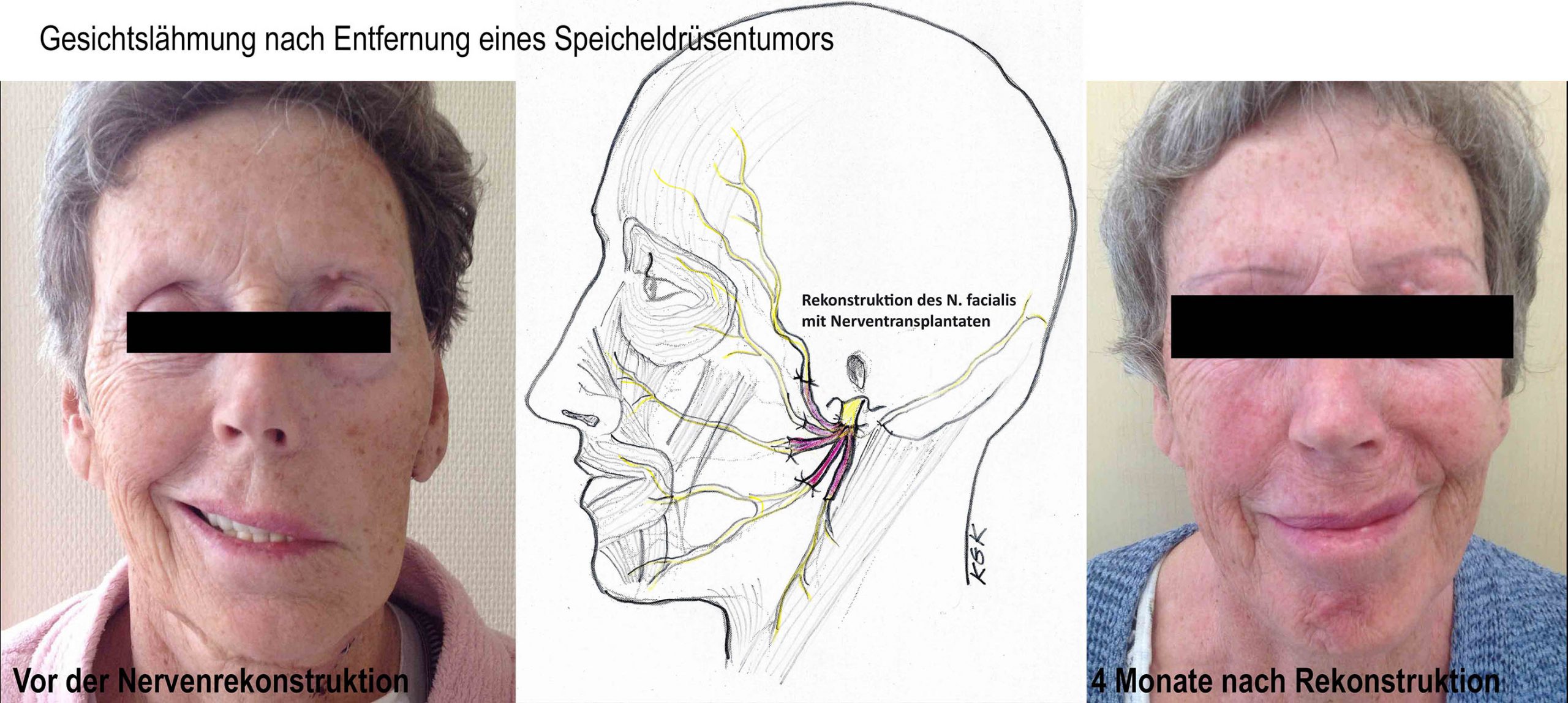
For instance, during complete oncological resection of a parotid tumor with facial nerve involvement, both nerve stumps are meticulously identified under the operating microscope, evaluated with intraoperative electroneurography and neurostimulation, verified free of residual tumor cells via frozen section pathology, and immediately reconstructed using autologous nerve grafts (such as the sural nerve or great auricular nerve).
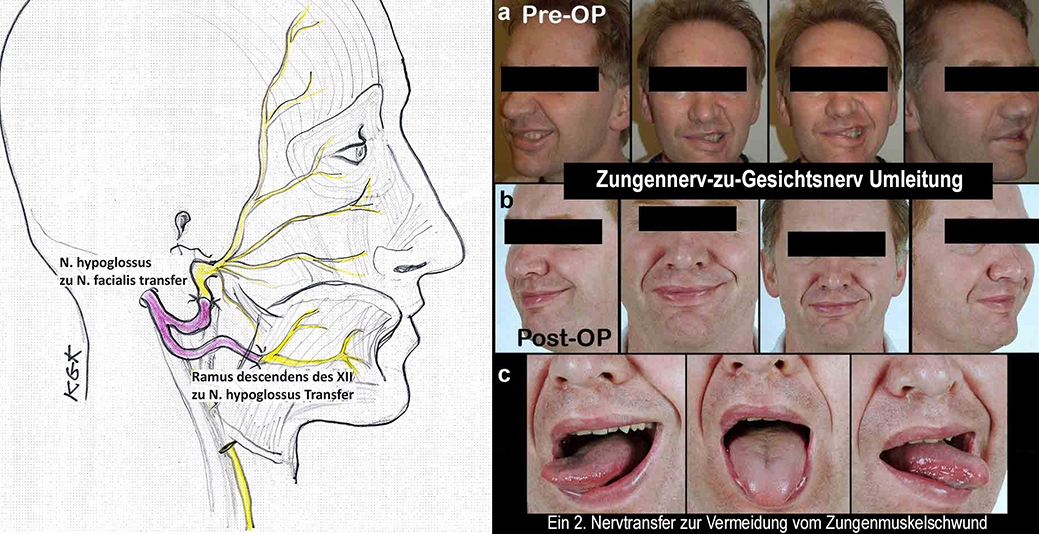
If a viable proximal cranial nerve stump is unavailable or functionally compromised (as after extended skull base tumor resections), we perform nerve transfer procedures (neurotization)—using the hypoglossal nerve (CN XII) or the descending ramus of the hypoglossal nerve (ansa cervicalis)—to re-innervate the facial musculature and restore static tone and dynamic excursion to the face.
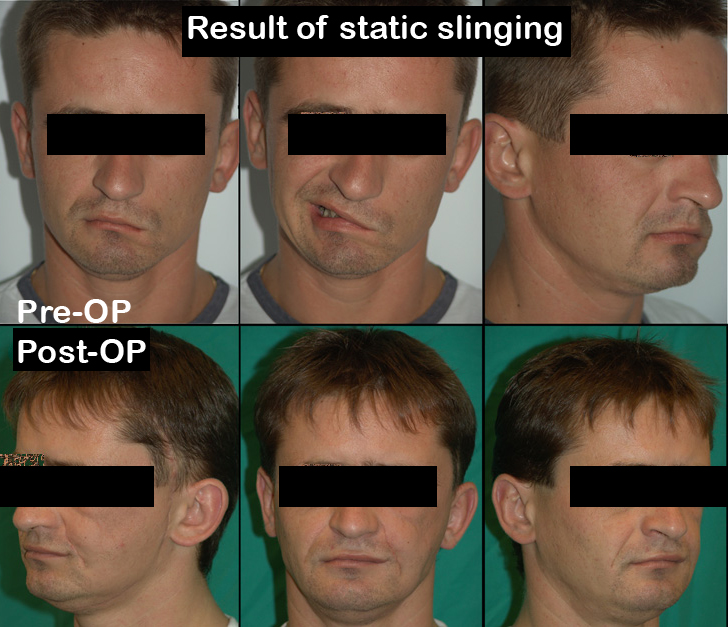
In cases of long-standing facial paralysis (static and dynamic facial palsy present for several years, where the native facial muscles have undergone irreversible motor endplate atrophy), secondary facial reanimation strategies are indicated. These include static procedures (such as fascia lata suspension slings, static tendon or suture suspensions, canthoplasty, and upper eyelid gold or platinum weight implantation) as well as dynamic procedures (local muscle transposition such as temporalis muscle transfer, or microneurovascular free functional muscle transplantation [FFMT] such as free gracilis muscle transfer).
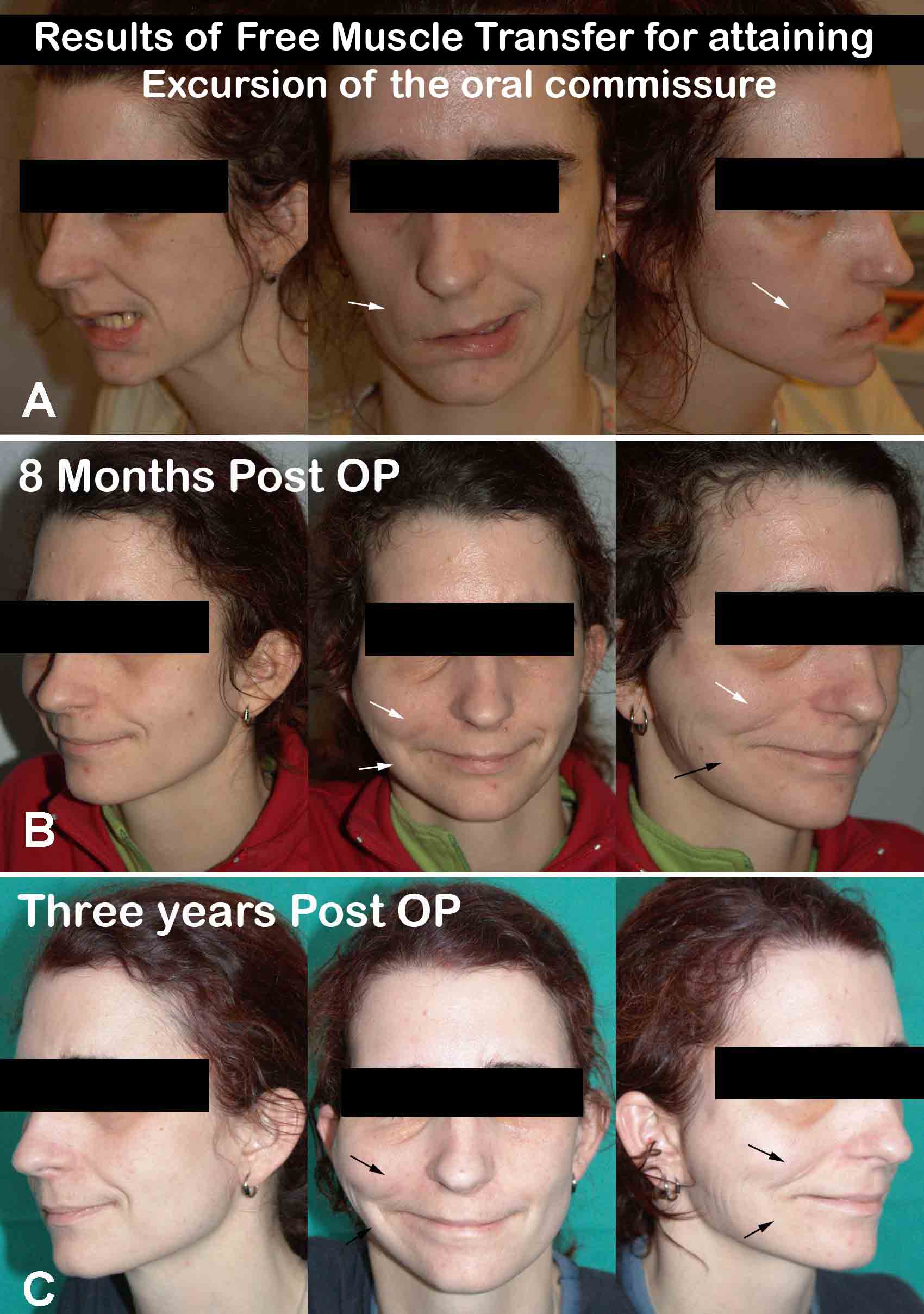
The selection of the surgical technique depends on patient age, general health status, functional requirements, and individual compliance. For example, in a young, otherwise healthy patient with long-standing facial palsy, microneurovascular free functional muscle transplantation (gracilis transfer with cross-face nerve grafting or masseteric nerve innervation) is the treatment of choice to restore an authentic, spontaneous smile. Conversely, in older or frail patients, local muscle transposition procedures provide reliable, less invasive outcomes with accelerated rehabilitation. As with all peripheral nerve lesions, every patient must be evaluated individually to tailor a customized therapeutic strategy.
- Reconstruction Timeline in Facial Nerve Palsy:
- Open facial nerve transection: Immediate primary microsurgical reconstruction
- Closed / blunt injury: Conservative observation for up to 4 months with targeted facial physiotherapy, massage, and neuromuscular retraining
- After 4 months without clinical/electrophysiological improvement: Primary facial nerve reconstruction (nerve autografting, nerve transfer / neurotization) followed by specialized neuro-rehabilitation
- Long-standing facial nerve palsy: Secondary facial reanimation (static fascial suspension, local muscle transfer, free functional muscle transplantation [FFMT])
Moebius and Moebius-Like Syndromes:
Facial palsy in childhood resulting from congenital absence or hypoplasia of the facial nerve nuclei in the brainstem, or congenital absence of the mimetic facial muscles, is termed Moebius syndrome. Moebius syndrome typically affects both sides of the face (bilateral congenital facial palsy in children), leaving affected children with an expressionless, mask-like face and inability to smile.
There is also a spectrum of related conditions presenting with unilateral paralysis of the facial mimetic musculature, known as "Moebius-like syndromes." Surgical management is aimed at restoring dynamic oral commissure excursion and smiling capability, employing local, regional, and microvascular free muscle transfers (e.g., free gracilis transfer) as well as supportive static procedures.
Selected Clinical Examples: Surgical Treatment of Facial Nerve Palsy