
Compression Neuropathies / Nerve Entrapment Syndromes:
In principle, any peripheral nerve in the body can develop a compression syndrome. In the upper extremity, common conditions include Carpal Tunnel Syndrome (median nerve), Cubital Tunnel Syndrome & Guyon's Canal Syndrome (ulnar nerve), Supinator Syndrome / Radial Tunnel Syndrome (deep branch of the radial nerve / posterior interosseous nerve), and Thoracic Outlet Syndrome (brachial plexus). In the lower extremity, common conditions include Tarsal Tunnel Syndrome (tibial nerve), Peroneal Nerve Entrapment (fibular / peroneal nerve), Saphenous Nerve Neuropathy, and Meralgia Paresthetica (lateral femoral cutaneous nerve).
For compression neuropathies, surgical management is generally indicated when clinical and electrophysiological diagnostic criteria are met and conservative treatment has failed to provide sufficient relief.
Here are several frequent examples of compression neuropathies and their surgical management strategies.
Carpal Tunnel Syndrome:
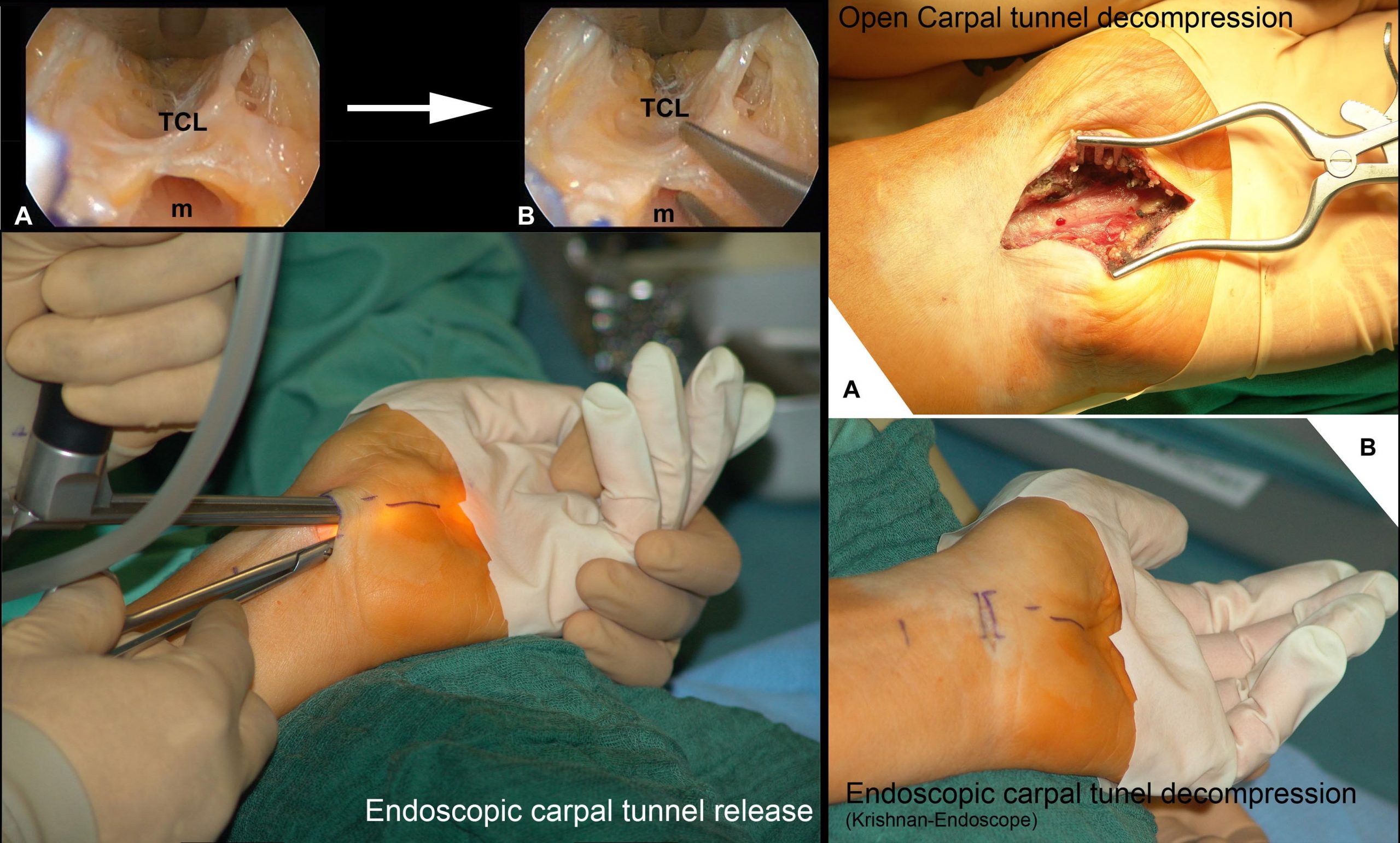
This syndrome is caused by chronic compression of the median nerve as it travels through the carpal canal beneath the transverse carpal ligament (flexor retinaculum) at the wrist. It is notably common in patients aged between 45 and 60 years. Typical symptoms include paresthesias (tingling/numbness), nocturnal dysesthesias in the palm and radial digits, and pain-related impairment of fine motor hand function. In approximately 35% to 40% of patients who consult a specialist at an early stage, the condition can be managed conservatively. Surgical management of carpal tunnel syndrome provides permanent relief by dividing the transverse carpal ligament, thereby decompressing the constricted median nerve within its canal.

Sulcus Ulnaris Syndrome / Cubital Tunnel Syndrome:
This syndrome can arise from previous closed trauma to the elbow region as well as age-related or anatomical degenerative factors. Men and women are affected with roughly equal frequency. Characteristic symptoms include pain radiating from the elbow down to the hand during elbow movements, as well as (in advanced cases) progressive loss of fine motor hand skills accompanied by muscular atrophy in the hypothenar area and interosseous spaces. When non-surgical (conservative) measures have been exhausted, surgical intervention is recommended. During surgery, the ulnar nerve is released from its entrapment canal at the elbow and, if indicated, relocated to a protected position on the anterior aspect of the elbow joint (anterior transposition).
Thoracic Outlet Syndrome (TOS):
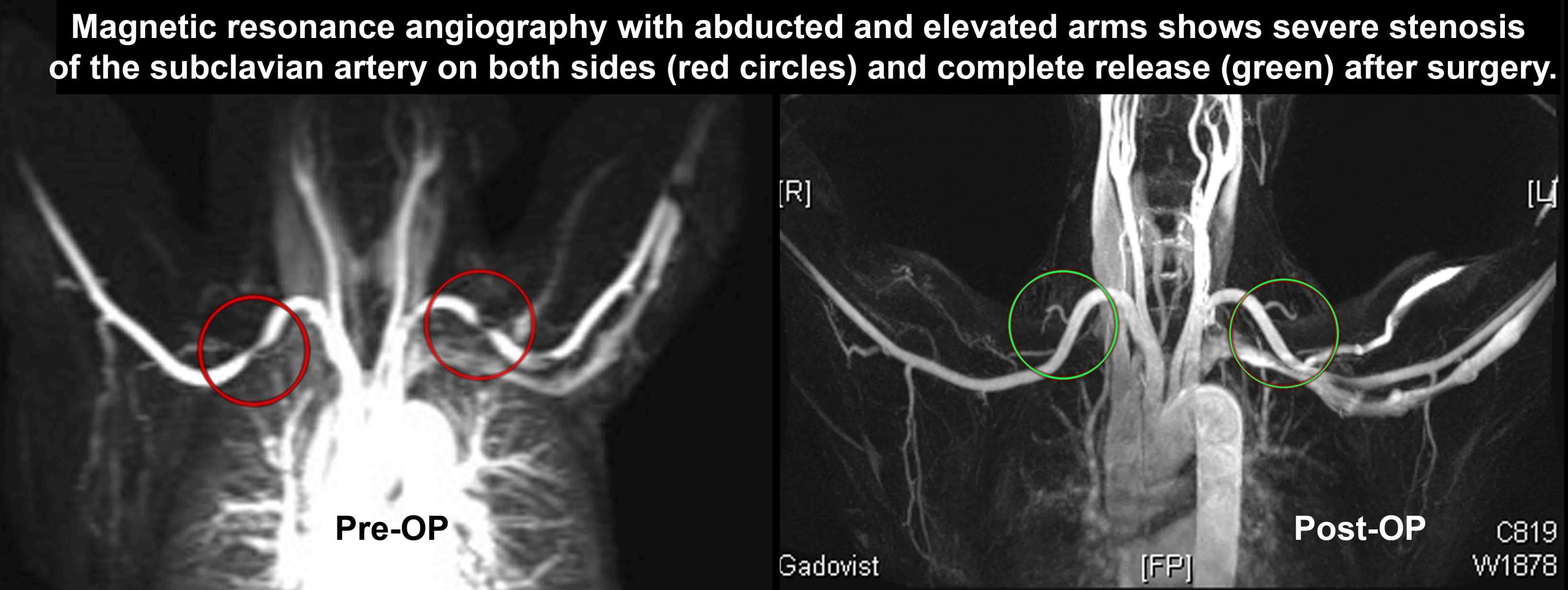
This syndrome is caused by the entrapment of neurovascular bundles traversing from the neck and shoulder area into the arm (for instance, between the clavicle and the first rib, or within the scalene triangle). Women aged 20 to 45 years are predominantly affected (ratio of women to men approximately 4:1). In the initial stages, the syndrome presents with tingling sensations up to sensory loss in the arm and forearm. As the condition advances, muscular weakness develops (potentially progressing to complete motor paralysis) of the shoulder, upper arm, and forearm muscles. Involvement of adjacent vascular structures that accompany the nerve trunks is also characteristic.
Approximately 60% of cases are successfully managed conservatively. In particularly severe presentations or after unsuccessful conservative treatment, operative intervention is indicated, where comprehensive neurovascular decompression is achieved through surgical resection of the first rib.
From a neurosurgical standpoint, the long-term prognosis following timely nerve decompression is excellent. In all peripheral nerve disorders, postoperative physiotherapeutic rehabilitation plays just as pivotal a role as the surgical procedure itself.



Tarsal Tunnel Syndrome:
In tarsal tunnel syndrome, mechanical constriction of the tibial nerve occurs within the fibro-osseous tunnel behind the medial malleolus. The syndrome manifests with pain, painful muscle cramping, and sensory disturbances across the sole of the foot and the ankle region. Older individuals with comorbid conditions, such as diabetes mellitus, polyneuropathy, or peripheral arterial occlusive disease, are particularly affected. Because of these systemic risk factors, minimally invasive decompression surgery has been increasingly preferred in recent years, especially in tarsal tunnel syndrome, to prevent complications such as delayed wound healing.