Peripheral Nerve Injuries:
A peripheral nerve can be damaged by open injuries (such as stab wounds, lacerations, blast injuries, or gunshot trauma) as well as by closed injuries (blunt trauma, traction or stretch injuries, torsional trauma, etc.).
In open peripheral nerve injuries, microsurgical nerve coaptation (suture) is typically performed during primary wound management. In polytraumatized patients with life-threatening injuries (e.g., severe traumatic brain injury, major vascular trauma), peripheral nerve reconstruction is undertaken once general stability is achieved and acute risks are controlled (generally within two weeks).
In closed or blunt injuries, peripheral nerve damage manifests through corresponding neurological deficits. In reversible injuries, initial functional deficits often recover spontaneously within two to three months. If neurological deficits persist despite intensive physical therapy and conservative management, surgical exploration and reconstruction must be considered.
- Timeline & Protocol for Peripheral Nerve Reconstruction:
- Open injury – Immediate microsurgical reconstruction whenever feasible (dependent on the patient's systemic condition)
- Closed injury – Clinical and electrophysiological monitoring for up to 5 months
- If no motor recovery occurs – Primary nerve reconstruction (direct coaptation / nerve grafting / nerve transfer)
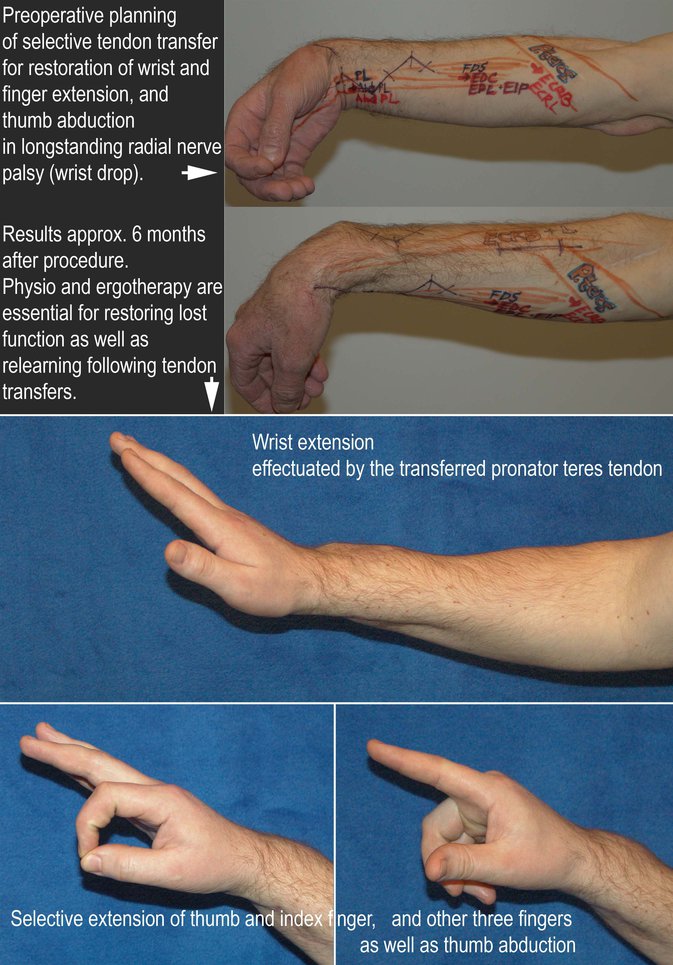
- Late presentation (>1 year post-trauma) – Secondary reconstructive procedures for functional restoration (tendon transfers, local muscle transfers, free functional muscle transplantation [FFMT])
Frequently Asked Questions:
? What are the earliest signs of a peripheral nerve injury?
Answer: Functional deficits (loss of muscle strength ranging to complete paralysis of the affected extremity; sensory deficits or dysesthesias in the corresponding dermatome), along with neuropathic pain.
? How long is the hospital stay for a nerve reconstruction?
Answer: This depends on any concomitant injuries. For an isolated peripheral nerve reconstruction, the hospital stay is typically between four and seven days, depending on the complexity and extent of the reconstructive procedure.
? What is the prognosis following peripheral nerve reconstruction?
Answer: Prognosis depends fundamentally on the severity, mechanism, and level of the injury. In nerve compression syndromes (e.g., carpal tunnel syndrome, thoracic outlet syndrome), rapid relief of sensory disturbances and pain can often be expected, while muscle strength recovers over subsequent months. When direct nerve coaptation or nerve grafting (transplantation) is performed, prognosis is critically time-dependent: the earlier reconstruction is performed, the better the functional recovery. Under favorable circumstances, meaningful functional recovery returns after 12 to 18 months, corresponding to axonal regeneration rates.
Notwithstanding these general principles, each case must be evaluated individually and discussed in detail with the treating specialist.
Selected clinical examples: Primary peripheral nerve reconstruction (early presentation) and secondary functional reanimation via salvage procedures (longstanding paralysis):